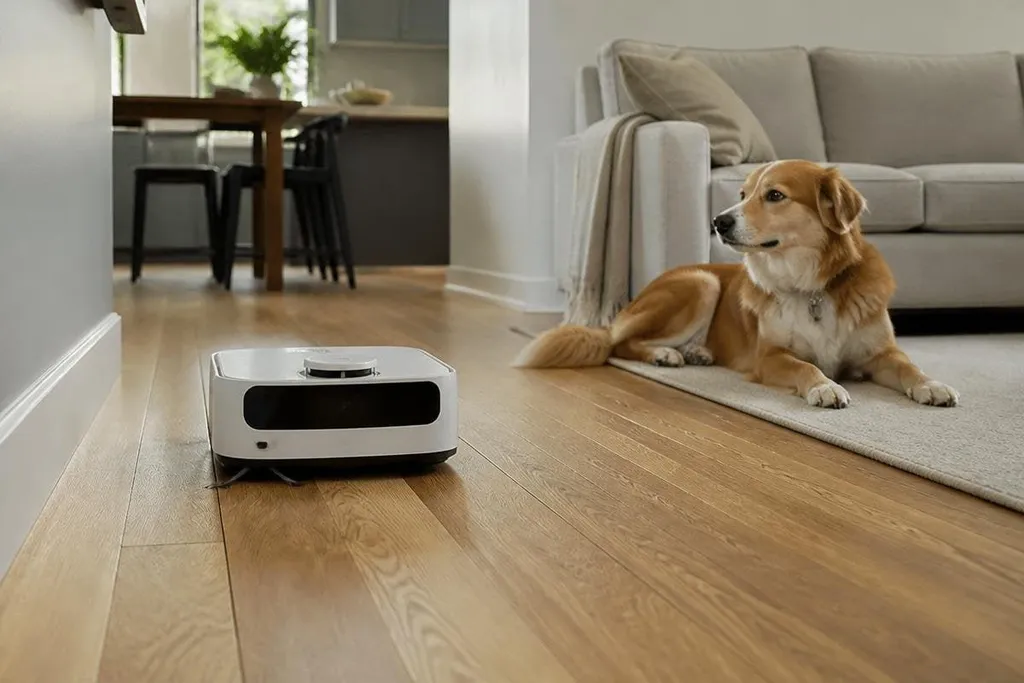
The first useful home robot shouldn't try to run the whole house. It should handle one repeatable chore, work safely around people and pets, and tell you when it needs help.
Quick read:
- Start with a task that happens often and follows a clear pattern.
- Choose work that can pause safely when the robot gets confused.
- Count setup, charging, cleaning, and recovery time as part of the job.
Start with the chore, not the robot
A home robot earns its space by finishing a job. The right first task is usually dull, repeated, and easy for you to check after the robot stops.
Floor cleaning fits that test better than many household jobs. The robot can work in a defined area, return to a known station, and leave a result you can see. That makes failure easier to spot and fix.
Laundry is harder. A robot has to find separate items, identify fabric, open and close doors, load a machine, and deal with clothes that do not sit in the same shape twice. Each extra step creates another place for the task to stop.
The same problem affects cooking. Handling food adds heat, sharp tools, spills, hygiene rules, and changing objects. A robot that can move a bowl in a demonstration may still need help with a crowded kitchen counter.
The best first tasks have clear limits
A good starter task has a fixed start point, a small working area, and an obvious finish. Those limits reduce the number of choices the robot must make.
Useful early jobs may include moving a known object between fixed locations, checking a room for an open door, or collecting items from a marked bin. Each job can use a map, a set route, or a short list of allowed objects.
That structure matters because home spaces change. A chair moves, a bag lands on the floor, or a child leaves a toy in the robot's path. The robot needs a safe response for each case, such as stopping, backing away, or asking for help.
A task that fails safely is easier to live with than one that fails quietly. If the robot stops beside a blocked doorway, you can fix the problem. If it drops an object near a stair, the cost is much higher.
Measure the work around the work
The chore itself is only part of the job. You also need to count setup, charging, emptying bins, cleaning sensors, and handling errors.
A robot that runs for a short period but needs frequent attention may add work instead of removing it. Ask how often you must clear its path, refill supplies, remove stuck objects, or reset the task.
A task claim needs a named robot and a test record that shows when a person had to step in. Home robotics coverage from Robot24.com can tie that claim to the test setting before you check the app, cloud connection, map, or remote operator it needs.
The same check applies to software. A robot may need a phone app, a cloud connection, a map of the home, or a remote operator. Those needs affect privacy, cost, and what happens when the network or service stops working.
What a useful home robot must show
Product pages often focus on what a robot can do once. Your concern is the tenth run, after the room has changed and the battery needs charging.
Look for proof that matches your home: repeated runs, clear failure messages, safe stopping, and a way to recover without starting the whole job again. If that evidence is missing, treat the task as a promise rather than a working feature.
I'd start with a task that saves small amounts of effort every day, because repeated use will expose weak spots faster than a rare household job.
A buying checklist
Use this list before you pay for a home robot:
- Name one job: Write the exact action, location, and finish point.
- Watch a full run: Check for cuts, remote control, and help from a person.
- Test the failure path: Find out what happens when an object blocks the route.
- Count your time: Add setup, charging, cleaning, and recovery to the advertised task time.
- Check the home fit: Measure door widths, floor changes, stairs, pets, and places where the robot could get stuck.
- Plan the exit: Confirm how you can stop the robot, remove it, and cancel the service if the product depends on an account.
A first home robot should do one job often enough for you to judge it with ordinary use. If it can finish that job, stop safely, and need little help, add a second task later; if it cannot, a larger list of promised abilities won't fix the purchase.